
How Many Types of DIN Rail Terminal Blocks Are There?
If you’re an electrical panel designer or have experience in the automation of industrial processes, then you’ve probably come across the term DIN rail terminal block at some point. These tiny but mighty components are a vital part of managing wire connections in a compact and organized way. Comparing the many different types of terminal blocks can seem overwhelming, but this guide is intended to help you understand all the differences between the various types and how to choose the best one for your application. We will be examining all the different types of DIN rail terminal blocks, including differences, features and how to select the correct type for your application.
What Are DIN Rail Terminal Blocks?
An industrial Electrical connects, secures and organizes wires and is critical to any industrial electrical system. Because the name suggests that terminal block mounts are on a standard metal rail (DIN rail), they provide a safe and reliable way to distribute electric power throughout various industrial applications.
Different styles, sizes, and capabilities are available for din rail terminal blocks. The uniform design of din rail terminal blocks enables their interchangeability and usability, making them versatile for many commercial and industrial wiring applications. Whether you need signal wiring, power distribution, or ground connections, there is a din rail terminal block to fit those needs.
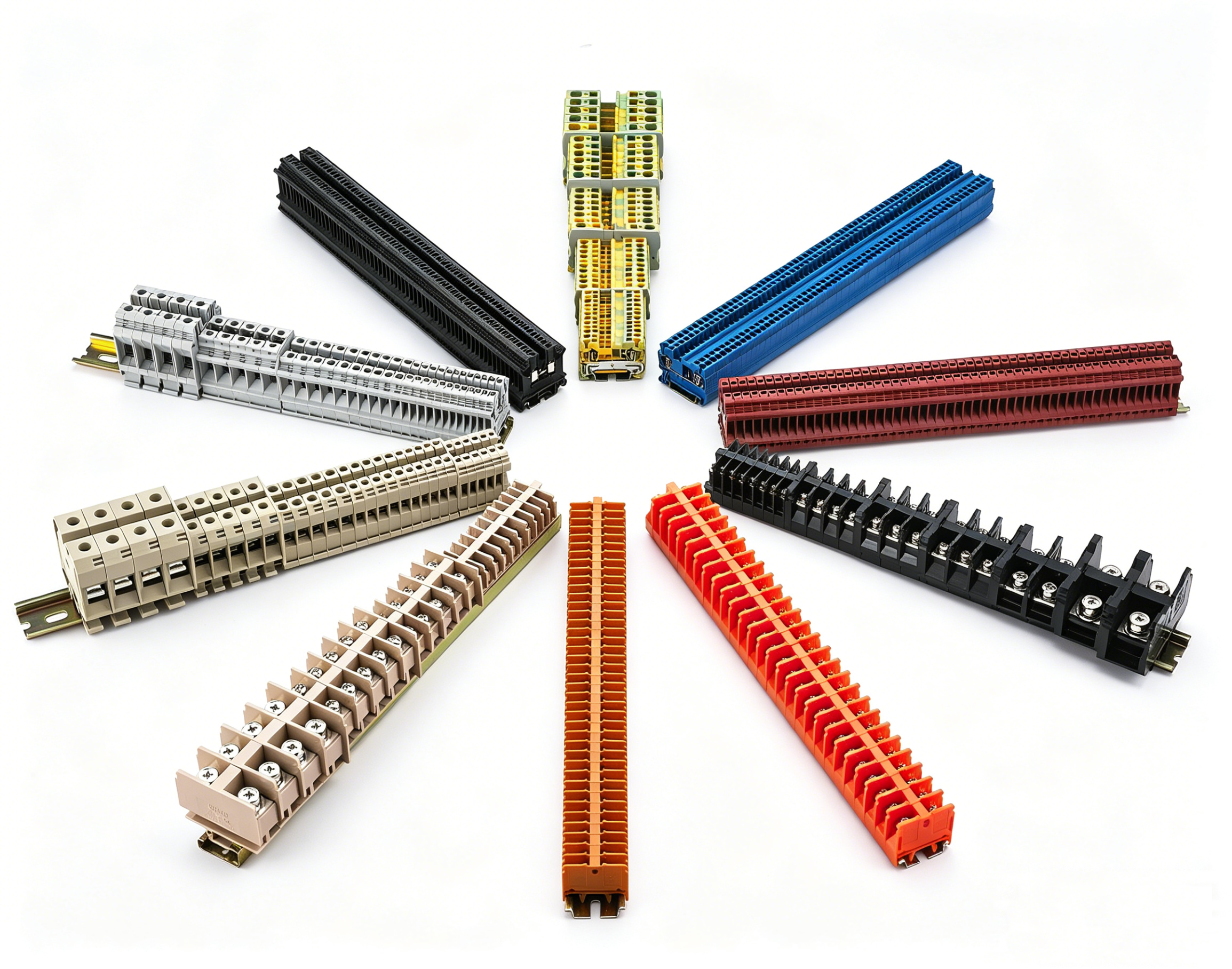
The Different Types of DIN Rail Terminal Blocks
Selecting the correct DIN-rail terminal block from the many available can be difficult due to their diversity. Knowing which type to use and its individual characteristics will help you with this situation.
The following are the most common types of terminal blocks:
Screw Terminal Blocks
Screw terminal blocks are one of the most popular types of terminal blocks and use a screw as the means for securing electrical wires. Screw terminal blocks provide a reliable connection while also providing a strong vibration resistant connection. As a result, screw terminal blocks are a very popular choice in industrial machinery and infrastructure applications.
- Benefits: Strong grip, versatile for many types of wires, and durable over time.
- Disadvantages of Adjustable Wall Shelves: Long installation time; a chance of getting loose over time unless they are fixed properly.
Spring Terminal Blocks
A spring clamp acts as a connector for wires instead of screws in spring terminal blocks. They are much easier to install than screw-type terminals.
- Positive Aspects: Quick and dependable connections, not subject to vibrations, and relatively low maintenance required.
- Disadvantages: The spring mechanism may become less effective with time, and they were typically not able to accept cables that are as thick or narrow as they would have had if they used screw terminal blocks.
Push-in Terminal Blocks
Push-in terminal blocks are a new style of terminal block that has been improved for quicker mounting without the use of tools required for wiring, simply push the wire into the connection point and it will be securely retained.
- Benefits: No tools required to install, saves you time and is perfect if you plan to wire a lot of products.
- Disadvantages: May be more costly to install than traditional screw terminal blocks, and are not compatible with some wire types.
Other Specialized DIN Rail Terminal Blocks
In addition to general-purpose DIN Rail Terminal Blocks, there are many types of specialized terminal blocks designed specifically to meet the needs of different applications.
- Fused Terminal Blocks: These include built-in fuses for overcurrent protection.
- Grounding Terminal Blocks: Specifically designed for grounding wires, ensuring system safety.
- Terminal Blocks with multiple levels: They permit many electrical connections to be made within a minimal amount of space thereby providing considerable savings of valuable space inside of a controlling cabinet.
How to Choose the Right DIN Rail Terminal Block?
Choosing a DIN rail terminal block is dependent upon numerous factors: application; environment; electrical specification of equipment. Key elements to consider include:
- Determine the type of connection based on speed of installation, how well it handles vibration, and if the connection needs to be maintained. Types include screw, spring, and push-in type connections.
- Electrical Ratings: Ensure the terminal block meets your voltage, current, and insulation demands.
- Consideration for Environmental Conditions: Choose terminals with good durability and ingress protection rating when exposed to extreme environments.
- Space Time Restrictions : Space may prohibit using large terminal blocks on crowded control panels, so multi-level or compact designs may be better suited for that application.
FAQs
What Are DIN Rail Terminal Blocks Made Of?
Usually, the insulation and conductance of DIN rail terminal blocks are derived from strong materials. For example, polyamide plastics for insulating materials and either copper or brass for conducting electricity. Accordingly, the strength of these materials allows the terminal block to function under conditions of high temperature, pressure, and vibration.
Why Are DIN Rail Terminal Blocks Used?
Terminal blocks provide easy wiring connections. This makes connections less complicated and more organized inside the overall wiring system inside of any control panel. Terminal blocks are very useful for manufacturing, automotive, energy distribution, etc.
Are DIN Rail Terminal Blocks Universal?
The standardized design of DIN rails makes most terminal blocks interchangeable and able to be replaced easily; however, terminal blocks still have to be checked to ensure they are compatible for certain applications.
Conclusion
DIN Rail Terminal Blocks play an essential role in electrical and industrial applications. They provide a safe and organized way to manage wiring in many applications. Terminal Block styles range from the traditional screw terminal to a modern push-in terminal connection. Choosing the right type of terminal depends on what you need (installation speed, vibration resistance, etc.). To make a safe and efficient decision regarding your electrical systems, you need to become familiar with the characteristics and benefits of each type of terminal block.
Post time: Jun-01-2026