
What is a Jumper on a Terminal Block?
The terminals in an electrical distribution panel are connected using wiring and other accessories. Wiring accessories, including jumpers (also known as “links”), are the components that make it possible to connect your circuit breaker to the electrical power supply. In this article, we will go over the various types of jumpers, why they are so significant, and how they work to provide safe, efficient, and reliable connections within a terminal block.
Understanding Terminal Blocks
To begin with, we need to define terminal blocks so that we know what the jumpers actually are. These are insulated devices used for connecting multiple wires together, safely and neatly. Terminal blocks are used in many different ways in many different applications; for example, in commercial applications and residential electrical wiring. They are available with several different types of configurations, including screw-in, spring clamp and plug-in types of terminal blocks. A specific example of a type of terminal block that is widely used is a DIN rail terminal block, which can be easily mounted onto a metal rail.
What is a Jumper?
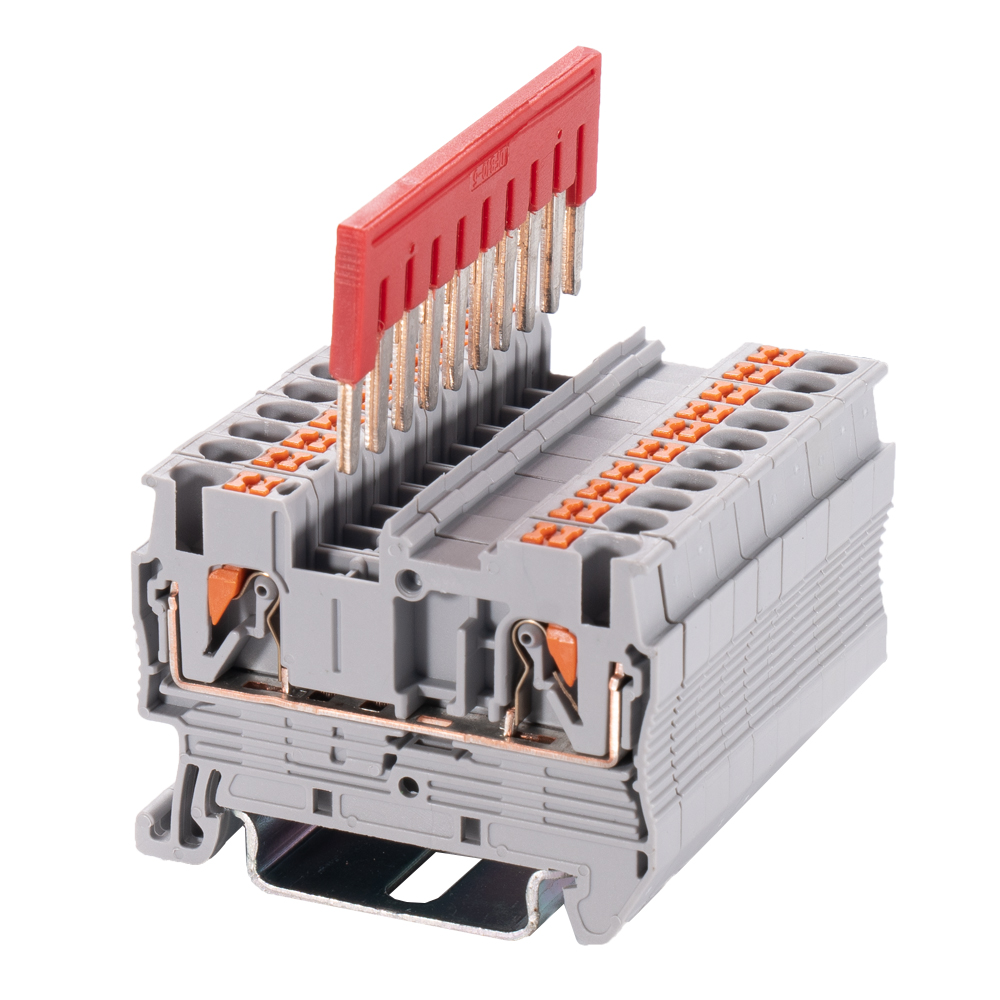
A jumper is an electrical device that consists of a conductive path or conductor that connects two or more terminals in a terminal block, with the main purpose of providing continuity between the different points of a circuit connected to the terminal block. Jumpers can be used to connect circuits together and eliminate the need for additional wiring in many applications.
Why Do They Call Them Jumpers?
The word “jumper” comes from the idea of “jumping” an electrical signal from one location to another. Rather than run long lengths of cable between two locations using electrical wiring, jumpers make it possible to create a shorter path for the flow of the electrical current, which is where the term comes from. This allows for faster installations and also helps keep the control panel and junction boxes organized by eliminating excess wires.
How Do Jumpers Work on a Terminal Block?
A jumper facilitates electrical connection between two terminals in a terminal block. By inserting a jumper, you can connect the electrical circuit of the two terminals. For example, if you have several devices that all need to be connected to the same power supply, the jumper can connect all of the devices directly to the power source without having to run separate wire connections to each device. In addition to saving time, you can also troubleshoot and make changes more easily using this design.
Applications of Jumpers
Jumpers are utilized in various applications, including but not limited to:
- Power distribution systems
- Control panels in machinery
- Junction boxes
- Lighting control systems
Jumpers can also serve as temporary connections during testing processes or safety interlocks in an industrial setting.
FAQ
How to Use Terminal Block Jumpers?
Jumpers for Terminal Block Connections are easy to use; choose the right one for the size of your terminal block. To connect the terminals, simply insert one end of the jumper into the first terminal and the second end into the terminal that you want to connect. Ensure that the connection is tight or there is a chance of disconnecting.
Is a Shunt the Same as a Jumper?
Both shunts and jumpers act as electrical connections between various points; however, these two are not identical. The shunt will be designed for bypassing a device rather than measuring the current flow through the attached device. However, a jumper has many uses, including connecting multiple devices with terminals at a terminal strip.
In closing, jumpers play a key role in allowing a circuit to be connected via a terminal block. All Connectors Share the Same Purpose but may be used differently for various applications so learning about the jumper’s function and potential to help you perform electrical projects should give you a better looking and more efficiently designed product once completed. And the connections of your systems will benefit greatly from having learned how to utilize them.
Post time: Jun-22-2026