
What do the colors of terminal blocks mean?
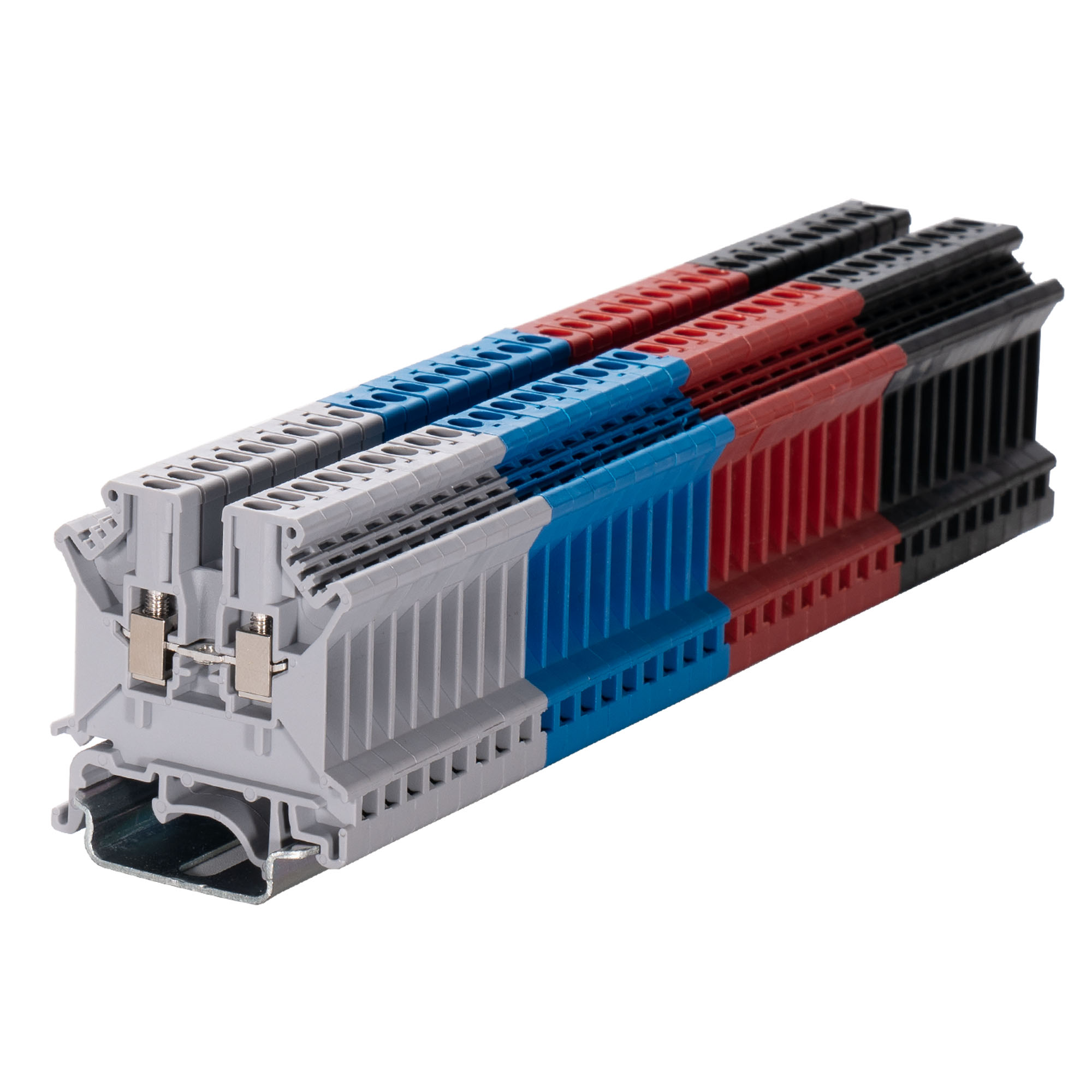
When installing electrical equipment, knowing the color code of your terminal blocks will help you keep your working environment safe and efficient. The colored terminal block serves a function beyond being designed to just “look good.” The colors provide valuable information about how the electrical equipment works with respect to the device’s electrical wiring and function. This article is going to discuss the meaning of each of the terminal block colors, including L1, L2 and L3 terminals’s specifically in Europe, and will answer frequently asked questions about the meaning of terminal block color.
Understanding Terminal Block Colors
The use of Terminal Blocks is vital in all types of electrical systems; from household electrical wiring to complex industrial electrical systems. The color coding of terminal blocks provides a fast and easy way for technicians to identify wires and their purpose. Each country and region has its own standards, but generally, the following guidelines define the general conventions involved with Terminal Blocks in their use worldwide:
1. Black and Brown: Colors are generally representative of the phases (L1 And L2). The black colour normally represents phase L1 while the brown colour normally represents phase L2.
2. Blue: This specific color will usually identify the Neutral wire. If you come across terminal blocks in the color Blue, you may safely make the assumption that they will be used for connecting Neutral wires.
3. Green/Yellow: Green/yellow striped wire is known universally as the Ground (or Earth) Connector, and in regard to safety is essential in all types of electrical installation.
4. Gray: Gray is capable of being utilized as a color for L3 phase conductors in some regions, as well as multiple neutrals in a multi-phased system.
Specific Color Codes for L1, L2, L3 in Europe
According to the IEC (International Electrotechnical Commission), L1 (Line 1), L2 (Line 2), and L3 (Line 3) colors are indicated in Europe as follows:
L1 (First Phase): Brown
L2 (Second Phase): Black
L3 (Third Phase): Grey
The use of color coding in three-phase systems makes it easier to identify live wires, which increases the accuracy of installations and decreases the likelihood of making mistakes.
Common Questions About Terminal Block Colors
Q: Why are terminal block colors important?Safety and efficiency of electrical systems depend on the colors of terminal blocks. Terminal block colors allow technicians to easily identify the function of each wire and can help reduce the chances of an accident during an installation or during maintenance work.
Q: Do terminal block colors differ by country?Yes, even though colours have some level of standardisation, there are differences by Countries or Regions. Therefore you must be able to consult your local Electrical Code so that you comply with it.
Q: Can I mix colors in my electrical wiring?B: Color mixing can cause confusion – thus it is recommended that you stick to your regional colour standards & system.
Conclusion
Anyone involved in electrical systems should have an understanding of terminal block colors’ meanings. This gives you tools to troubleshoot and wire properly, as well as follow safety codes. Terminal block colors also change as electrical systems become more advanced; therefore, staying updated on these items will help create safer practices in both residential and commercial installations.
Post time: Jun-30-2026